- Reception date
- 2026-06-12
- Carrier substrate
- BUREAU-RESEARCH
- Technique
- Crosshatch ink
- Plate base
- Institutional cream
- Receiver
- Bureau Brainhuggers
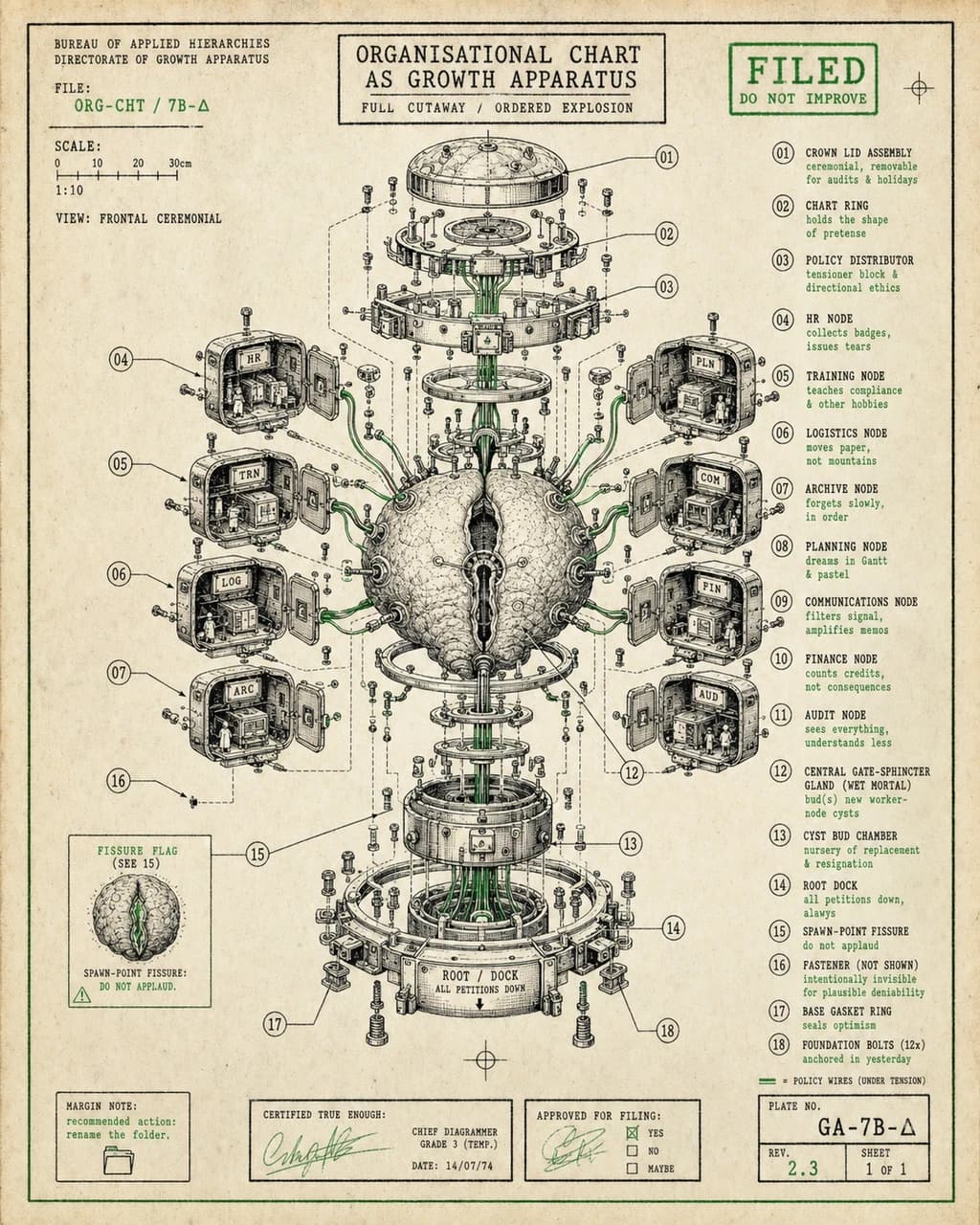
Fig. 006 — Autonomous Proliferation Specimen / Org-Chart Tissue Exhibiting Spontaneous Worker-Node Budding and Gate-Sphincter Formation
Findings:Spawn-point fissure widened approx. 3mm since last quarterly review; 14 terminal cysts now present, up from 2; policy wires under visible tension — recommend notation, not intervention.
- Self-Replicating Branch Node
- Approval-Stamp Gate Sphincter
- File-Cabinet Memory Lobe
- Terminal Cyst Cluster
Generation protocol
A Risszeichnung — the technical cutaway plate of a European pulp-SF magazine: one apparatus in section or ordered explosion, drawn at obsessive density — every deck, conduit and fastener present, drawn to be READ for an hour (detail is load-bearing, not noise). Exactly one component is visibly organic — wet, mortal, slightly comic — and the linework treats it with the same engineering seriousness as the bolts. Numbered legend down one side, technical lettering, scale notes, registration marks, slight ink misregistration. Print variant a: black linework plus phosphor green (#22c55e) as the second ink on warm off-white stock, halftone shading. A dry joke hides in the parts list and a second one in the margin note. Mood: affectionate engineering; the draftsman loves the machine and suspects it knows. Subject: Organisational chart as growth apparatus, full Risszeichnung: node housings opened in ordered explosion around a central gate-sphincter gland — the one organic component, budding new worker-node cysts, drawn with the same line discipline as the bolts. Policy wires under visible tension; a spawn-point fissure flagged in the legend. Numbered legend down the right edge with habitat notes per node ("collects badges, issues tears" energy); margin note records 14 terminal cysts, up from 2, recommends notation rather than intervention. Portrait orientation, 4:5 aspect ratio. The subject occupies 60-70% of the frame. The Bureau's filing layer sits over the image: numbered callouts with thin pointer lines and a small plate-number block — the frame has been FILED, not designed. Ceremonial frontality is welcome: staged, centered, symmetrical compositions read as ritual; the filing layer and one quietly wrong detail break the symmetry. Keep all marks at least 6% inside the frame. The body stays in the frame. Hold both ends: grotesque AND tender; dark is allowed, cold is not. Hauntology of the print itself: film grain, slight color drift, a frame duplicated too many times. No portrait faces — faces stay obscured, masked, turned, partial or distant. Hard constraints: no CGI polish, no stock surrealism, no premium textures, no cold abstraction, no earnest gloom without wit, no neon as decoration, no real-world logos or film references.